Chipotle Adobo Marinade Recipe: The Seven Components
This is the most useful recipe in the whole copycat silo, because the adobo is not one menu item — it is the base underneath Chipotle chicken, its steak, its vinaigrette and its sofritas. And unlike almost everything else on the menu, Chipotle publishes exactly what is in it. Seven things, in order of how much of each it uses. Get this right and four other recipes get easier.
⬇️ Jump straight to the recipe

Chipotle own ingredient statement lists its adobo paste as water, morita chilli, sunflower oil, garlic puree, cumin powder, black pepper and oregano — in that order, which is descending weight. So water is the biggest component and this is a loose, pourable paste, not the thick oil-based rub most copycat recipes make. There is no salt in it, no tomato, no vinegar and no sugar.
- Seven components, and Chipotle publishes every one of them.
- Water is listed first — so the paste is loose, not thick.
- Morita chilli is the chilli Chipotle names, not canned chipotles.
- No salt in the paste. Chipotle salts the meat separately.
- No tomato, vinegar or sugar — three things copycats add.
- It is the base for four menu items, not just one.
What Chipotle Actually Lists
Chipotle describes its chicken and steak identically, in its own nutrition menu: responsibly raised, marinated in our chipotle adobo, then grilled. That tells you the adobo matters and nothing about what is in it.
The ingredient statement does. Chipotle lists its adobo paste as:
Seven things. And because ingredient statements are required to run in descending order of weight, that list is also a rough recipe — it tells you that there is more water than chilli, more chilli than oil, and more oil than garlic.
Ingredients
The paste
- 6 dried morita chillies (about 15g), stems removed
- 3/4 cup hot water
- 3 tbsp sunflower oil
- 4 garlic cloves, crushed to a paste (or 1 tbsp garlic puree)
- 2 tsp ground cumin
- 1 tsp freshly cracked black pepper
- 1 tsp dried oregano, Mexican if you have it
Added separately, to the meat
- Fine salt, about 1 tsp per pound of meat
- 1 tbsp vinegar per pound, for chicken only
Instructions
- Toast the chillies. Press the moritas flat in a dry pan over a medium heat for 30 to 40 seconds a side, until they smell fragrant and darken slightly. Stop before they smoke, because burnt chilli turns the whole paste bitter.
- Soak. Cover with the hot water and leave for 20 minutes until soft and pliable. Keep the soaking water. It is the single largest component of Chipotle own list and throwing it away is the most common mistake.
- Blend. Put the chillies and all the soaking water into a blender with the oil, garlic, cumin, black pepper and oregano. Blend to a smooth, loose paste, thin enough to pour.
- Check the consistency. It should coat a spoon and run off it, not sit on it. Add a tablespoon of water at a time if it is stiff.
- Use it. Allow about 1/4 cup of paste per pound of meat. Coat the meat, then salt it separately. For chicken, add the vinegar at this point.
- Marinate. Refrigerate 2 to 8 hours. Longer than overnight and the chilli starts to dull rather than deepen.
Recipe Notes
- There is no salt in the paste itself, and that is deliberate. Chipotle lists its steak as beef, adobo paste and salt – three separate things – so the salt belongs on the meat, not in the marinade.
- Water is the first ingredient on Chipotle list, which means by weight it is the largest. That is why this is a loose paste rather than the thick oily rub most copycat recipes produce.
- Morita is the chilli Chipotle names. A canned chipotle in adobo is a reasonable substitute but brings tomato and vinegar that Chipotle paste does not contain.
- Keeps two weeks refrigerated in a sealed jar, or freeze it in an ice cube tray – one cube is roughly enough for one pound of meat.
Estimated Nutrition
Calculated estimate for one serving of this home recipe, not a Chipotle figure. It will shift with your brands, cuts and portioning.
Why the Order Tells You the Texture
This is the part that separates a close copy from a vague one, and it comes entirely from reading the list properly.
Water is first. Not oil, not chilli — water. Which means Chipotle adobo is a thin, pourable paste, mostly rehydrated chilli and its own soaking liquid. Nearly every copycat adobo recipe online builds a thick, oily rub instead, usually from a blended can of chipotles with extra oil. That produces something that sits on the surface of the meat rather than soaking into it.
| Chipotle order | Component | What that implies |
|---|---|---|
| 1 | Water | The largest part. Use the chilli soaking liquid, not fresh water |
| 2 | Morita chilli | The dominant flavour, and a specific chilli |
| 3 | Sunflower oil | Present but not the base — a few tablespoons, not a cup |
| 4 | Garlic puree | Blended smooth, not minced or sliced |
| 5 | Cumin powder | Ground, and Chipotle uses roasted ground cumin in its barbacoa paste |
| 6 | Black pepper | Chipotle specifies cracked black pepper elsewhere |
| 7 | Oregano | The smallest amount of all seven |
Morita, Not a Can of Chipotles
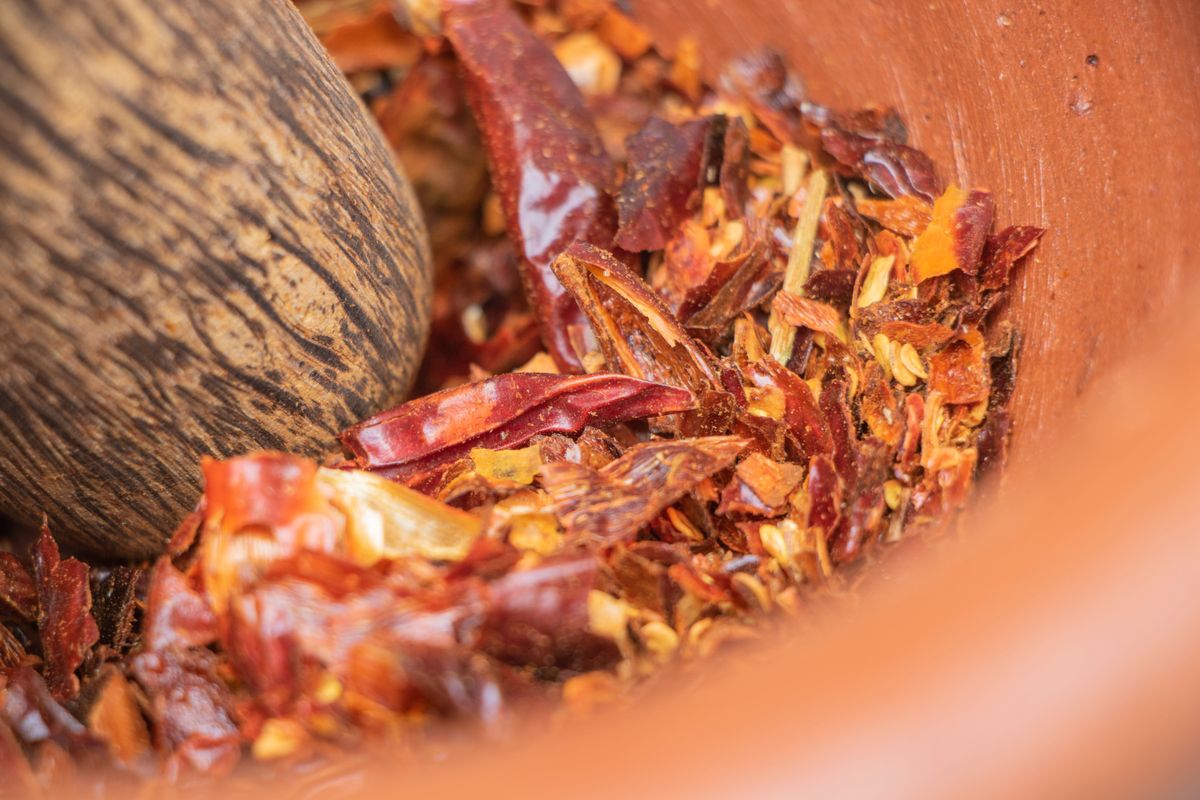
Chipotle names the chilli: morita. It uses the word consistently across its ingredient lists — in the adobo paste, in its chicken, in its barbacoa chilli paste, in the chipotle paste inside sofritas, and as morita chilli flakes in its beans.
A morita is a smoke-dried red jalapeno, which makes it a chipotle in the proper sense. But there are two types and they are not interchangeable:
| Morita | Meco | |
|---|---|---|
| Smoking | Shorter | Longer |
| Texture | Softer, more pliable | Drier, more brittle |
| Flavour | Fruitier, slightly sweet smoke | Dustier, more ashy smoke |
| Colour | Dark purple-red | Tan-grey |
| Rehydrates | Quickly, blends smooth | Slowly |
Morita is also the one you are far more likely to find, since it is what most shops sell as chipotle. If a packet just says chipotle and the chillies are dark red and bendy, they are moritas.
If you only have canned chipotles in adobo
You can get close, but know what you are adding. A typical can contains tomato puree, vinegar, sugar and onion as well as the chillies — none of which appear on Chipotle list. Use about 3 tbsp of canned chipotles with their sauce in place of the soaked moritas, skip the oil, and accept that the result will be sweeter and sharper than the real paste.
For the difference between this marinade and the Adobo Ranch dip that shares part of its name, see our Adobo Ranch guide — they are unrelated products and the confusion is common.
The Salt Is Not in the Paste
Chipotle lists its steak as exactly three things: beef, adobo paste, salt. Three separate entries, which tells you the salt is not inside the paste — it goes on the meat.
That is worth copying, for two practical reasons:
- You can salt by weight. About 1 tsp of fine salt per pound of meat is reliable. Salting a marinade and hoping it distributes is not.
- The paste keeps better and stays versatile. An unsalted paste can go into a vinaigrette, a bean pot or a tofu braise without dragging a fixed amount of salt with it.
One more difference between the two proteins, from Chipotle lists: its chicken contains vinegar and its steak does not. So if you are marinating chicken, add about a tablespoon of vinegar per pound alongside the paste. Full detail on our chicken recipe and steak recipe.
Four Menu Items Use This
Making a cup of this paste is worth the effort because it is not a single-use recipe. By Chipotle own ingredient lists, the same adobo turns up in:
| Menu item | How the adobo appears | Recipe |
|---|---|---|
| Chicken | Morita chilli, garlic, oregano and vinegar with the chicken | Chicken |
| Steak | Listed outright as adobo paste | Steak |
| Chipotle-honey vinaigrette | One of only five components | Vinaigrette |
| Sofritas | As a chipotle paste of the same make-up | Sofritas |
Barbacoa uses a close relative rather than the same thing — Chipotle lists its barbacoa chilli paste with roasted ground cumin and cracked black pepper, where the plain adobo says cumin powder and black pepper. A small wording difference, but it is the sort of thing Chipotle is precise about. Our barbacoa recipe builds that version.
What Copycat Recipes Add That They Should Not
Measured against Chipotle seven-item list, here is what gets smuggled in:
| Commonly added | On Chipotle list? |
|---|---|
| Tomato paste or puree | No — comes from using a can of chipotles |
| Vinegar | Not in the paste. It is in the chicken, separately |
| Sugar, honey or brown sugar | No |
| Salt | Not in the paste. Applied to the meat |
| Onion or onion powder | No |
| Smoked paprika | No — it is in sofritas, not the adobo |
| Lime or lemon juice | No — the citrus is in the rice, beans and salsas |
| Cinnamon, clove or achiote | No |
| Chipotle in adobo from a can | Brings tomato, vinegar and sugar with it |
None of these make a bad marinade. Several make a very good one. They just do not make this one, and the whole point of a copycat is fidelity. Put simply: any chipotle adobo recipe that starts with a can of chipotles in adobo is working from a different ingredient list to the one Chipotle publishes.
Being straight about the limits: Chipotle publishes the what and not the how much. It has never released a recipe for its adobo, never given a ratio, a soaking time or a marination time. The seven components are Chipotle. Every quantity on this page is ours.
The full set of components is indexed on our copycat recipes page, and if you want to understand the ingredient rather than cook with it, see what Chipotle adobo is.
Frequently Asked Questions
What is in Chipotle adobo?
Chipotle own ingredient statement lists seven things: water, morita chilli, sunflower oil, garlic puree, cumin powder, black pepper and oregano. Food labelling rules put those in descending order of weight, so water is the largest component and oregano the smallest. There is no salt, no tomato, no vinegar and no sugar in the paste.
Is Chipotle adobo the same as canned chipotles in adobo?
No, and this is the main reason copycat recipes miss. A can of chipotles in adobo is a sauce in its own right — it typically contains tomato puree, vinegar, sugar and onion alongside the chillies. Chipotle paste contains none of those. A can will get you in the area, but it brings sweetness and acidity that the real thing does not have.
What is a morita chilli?
A smoke-dried red jalapeno — so it is a chipotle, but a specific type. Moritas are smaller, softer, fruitier and smoked for less time than the larger, drier meco type. They rehydrate quickly and blend smooth, which is why they suit a pourable paste. Morita is the word Chipotle itself uses in its ingredient lists, repeatedly.
Why does the recipe have no salt in it?
Because Chipotle list does not. Its steak is listed as three things — beef, adobo paste, salt — which means the salt is applied to the meat as a separate step rather than mixed into the paste. Keeping them separate also lets you salt by weight of meat, which is more reliable than salting a marinade and hoping.
How long should you marinate in Chipotle adobo?
Chipotle does not publish a marination time, or say whether its meat is marinated in restaurant or by its suppliers. Two to eight hours in the fridge is what works for us. Past overnight, the chilli flavour starts to flatten rather than build, and the texture of chicken thigh begins to soften more than you want.
What does Chipotle use the adobo for?
Four things that we know of. Its chicken and its steak are both described as marinated in our chipotle adobo, then grilled. Its chipotle-honey vinaigrette lists adobo as one of five components. And its sofritas contains a chipotle paste with the same make-up. One paste, four menu items.
Can I use chilli powder instead of whole dried chillies?
It will not be the same, and the reason is the soaking water. Chipotle lists water as the first and largest component of the paste, and in this recipe that water is the chilli soaking liquid, which carries a lot of the flavour. Starting from powder gives you no soaking liquid to use and a duller, grittier result.
Methodology
The seven-component list on this page is taken verbatim from Chipotle own published ingredient statement, which lists ingredients in descending order of weight as food labelling requires. That statement is published on Chipotle UK website, because UK labelling law requires the disclosure; Chipotle US site does not publish equivalent per-item lists, so UK and US formulations may differ and that is flagged on the page. Chipotle publishes no quantities, ratios, soaking times or marination times for the adobo, so every number in the recipe is our own development work and is presented as ours rather than as Chipotle. Chipotle has never published a recipe for its adobo.