Chipotle Steak Recipe: Three Ingredients and Two Cuts
Chipotle lists its steak as three things: beef, adobo paste and salt. That is the entire ingredient list, and it makes this the simplest protein in the silo to copy — which leaves the difficulty entirely in the technique. Two technique points decide whether it works, and the most visible recipes get one of them badly wrong, to the point where following it will give you grey steak.
⬇️ Jump straight to the recipe

Chipotle lists its steak as beef, adobo paste and salt. No vinegar, no citrus, no sugar. Marinate 2 to 8 hours, dry the surface, sear very hot, pull it at 130F, rest 10 minutes, then cut it twice — against the grain into strips, then across into cubes.
- Three ingredients. Beef, adobo paste, salt — that is the whole list.
- Pull at 130F, not 145F. One top recipe says 145F and it is wrong.
- Cut twice: against the grain, then across. This is the real technique.
- Dry the surface before searing or it will steam.
- Chipotle does not publish the cut. Nobody agrees; we use flank.
- The leanest Chipotle protein — 150 cal and 6g fat per 4 oz.
Three Ingredients
Chipotle publishes the shortest possible list for its steak:
That is the whole thing. The adobo paste is itself water, morita chilli, sunflower oil, garlic puree, cumin powder, black pepper and oregano — so once you have made a batch of the paste, this recipe is two more ingredients.
Worth noting against its sibling: Chipotle chicken list includes vinegar. Its steak list does not. That is the only documented difference between the two marinades, and it means the things recipes commonly add here — lime juice, honey, apple cider vinegar, brown sugar — are not in Chipotle version.
Ingredients
- 2 lb (900 g) steak – flank, skirt or sirloin
- 1/2 cup adobo paste
- 2 tsp fine salt
- 1 tbsp sunflower oil, for the pan
Instructions
- Marinate 2 to 8 hours. Coat the steak in the adobo paste and the salt, and refrigerate. Chipotle steak list is beef, adobo paste and salt – there is no vinegar and no citrus in it, unlike its chicken.
- Bring it to room temperature. Thirty minutes out of the fridge. A cold steak in a hot pan overcooks its outside before the middle warms up.
- Dry the surface. Scrape most of the paste off and pat the steak dry with kitchen paper. This is the step people skip and it is why home versions steam instead of searing – wet meat cannot brown.
- Sear very hot, 3 to 4 minutes a side. Heavy pan, sunflower oil, smoking. Do not move the steak until it releases. Pull it at 130F / 54C for medium-rare.
- Rest 10 minutes, tented. Longer than you think. A steak cut at five minutes bleeds onto the board; at ten it holds its juice.
- Cut twice. First slice across the grain into strips about half an inch wide. Then turn the strips and cut across them into half-inch cubes. Two cuts, in that order – this is what makes it look and eat like Chipotle steak.
- Toss in the board juices. Everything that ran out onto the board goes back over the diced steak.
Recipe Notes
- PULL IT AT 130F, NOT 145F. One widely ranking recipe states mid-instruction that Chipotle cooks its steak to 145F. Every other established recipe targets 125 to 135F, and 145F is firmly medium – visibly grey and noticeably tougher once diced. We have seen no Chipotle source for any temperature at all.
- Chipotle does not publish the cut. Established recipes variously use flank, skirt, top sirloin, and sirloin or round or flat iron – and two of them cite Chipotle for different answers. Flank is our default: it takes a marinade well, sears fast and dices cleanly.
- The two-cut technique is the real secret of this one, and it is a technique rather than an ingredient. Against the grain first, then across. Cutting once gives you strips; cutting twice gives you Chipotle cubes.
- No vinegar and no citrus on Chipotle steak list. Its chicken list has vinegar; this one does not. Several recipes add lime juice, honey or apple cider vinegar.
- Steak is the leanest Chipotle protein at 150 calories and 6g of fat per 4 oz. It is also the lowest in protein of the meats, at 21g.
Estimated Nutrition
Calculated estimate for one serving of this home recipe, not a Chipotle figure. It will shift with your brands, cuts and portioning.
As on every page in this silo: Chipotle publishes per-item ingredient lists on its UK site, because UK labelling law requires the disclosure. Its US site publishes no equivalent list, so UK and US formulations may differ.
The 145F Problem
One of the most visible copycat steak recipes states, in passing inside its instructions, that Chipotle cooks its steaks to 145F. It gives no source. Every other established recipe for this dish targets between 125F and 135F.
For reference, the standard doneness scale — and these are standard beef figures, not Chipotle figures, because Chipotle has never published an internal temperature for anything:
| Pull at | Rests to | Doneness | For diced Chipotle-style steak |
|---|---|---|---|
| 120-125F / 49-52C | ~130F | Rare | Underdone once cubed |
| 128-132F / 53-56C | ~135F | Medium-rare | Our target |
| 135-140F / 57-60C | ~145F | Medium | Acceptable, firmer |
| 145F+ / 63C+ | ~150F | Medium-well | Grey and chewy. Avoid |
Two reasons to aim low with this dish specifically. Carryover cooking adds about five degrees during the rest. And dicing exposes every cut surface, so an overcooked interior has nowhere to hide — it is far more obvious in cubes than in slices.
Cut It Twice
This is the technique that actually distinguishes Chipotle steak, and it is free.
- Find the grain. Look for the direction the muscle fibres run — on flank and skirt they are long and obvious.
- First cut: across the grain, into strips about half an inch wide. This is the cut everyone knows about.
- Second cut: turn the strips ninety degrees and cut across them into half-inch cubes.
Why two cuts rather than one:
| One cut (strips) | Two cuts (cubes) | |
|---|---|---|
| Shape | Fajita strips | Chipotle cubes |
| Fibre length | Shortened in one direction | Shortened in both |
| Chew | Some pull along the strip | Tender in every direction |
| In a bowl | Strips clump and tangle | Distributes through the rice |
Four of the five established recipes land on this, which is about as strong as agreement gets, and it is the most actionable thing on the whole keyword. It also matters more for flank and skirt than for sirloin, because those cuts have the longest, toughest fibres — the two-cut method is what makes a cheap cut eat like an expensive one.
Which Cut? Chipotle Will Not Say
Chipotle list says beef. That is all. And the published recipes have filled that silence with four different answers, two of which claim Chipotle as the source without quoting or linking it.
| Cut | Marinates | Sears | Dices | Verdict |
|---|---|---|---|---|
| Flank | Very well | Fast | Cleanly | Our default |
| Skirt | Very well | Fastest | Cleanly | Excellent, more marbled, easy to overcook |
| Top sirloin | Well | Needs a thicker steak approach | Well | Good, more expensive, less beefy |
| Flat iron | Well | Fast | Well | Good if you can find it |
| Round | Poorly | Fine | Dry | Avoid — too lean for this |
Flank is our pick because it does all three jobs this recipe needs, and because the two-cut technique was more or less invented for it. The honest framing is: pick on availability and price, cook any of them to 130F, and cut all of them twice.
Why Yours Came Out Grey
If you have made copycat Chipotle steak and it came out greyish and slightly stewed, the cause is almost certainly moisture rather than the recipe.
An adobo paste holds a lot of water — Chipotle lists water as the paste first ingredient. Put a wet steak in a pan and all that water has to boil off before the surface can get above 212F and start browning. By the time it does, the inside is overcooked.
Three further points that follow from the same principle: cook in batches rather than crowding the pan, do not move the steak until it releases on its own, and use a heavy pan that holds its heat when cold meat lands in it.
The Leanest Protein on the Menu
| Per 4 oz, Chipotle published | Calories | Fat | Sodium | Protein |
|---|---|---|---|---|
| Chicken | 180 | 7 g | 310 mg | 32 g |
| Steak | 150 | 6 g | 330 mg | 21 g |
| Barbacoa | 170 | 7 g | 530 mg | 24 g |
| Carnitas | 210 | 12 g | 450 mg | 23 g |
| Sofritas | 150 | 10 g | 560 mg | 8 g |
Steak is the lowest-calorie and lowest-fat protein Chipotle sells at 150 calories and 6g of fat per 4 oz. It is also the lowest in protein of the meats at 21g — against 32g for chicken, which is the biggest gap between any two Chipotle proteins and usually a surprise.
So the choice between them is not a health question with one answer:
- Fewest calories: steak, at 150.
- Most protein: chicken, at 32g, and it is also cheaper.
- Best protein per calorie: chicken, comfortably.
Our home version comes out higher on both calories and protein than Chipotle figure, which is what happens when you weigh out 4 oz of cooked flank rather than relying on a scoop. Our highest-protein order guide and carne asada vs steak comparison go further.
Build the rest with our rice, beans and salsas, or follow the full assembly on our bowl at home guide. Everything is on the copycat recipes page.
Frequently Asked Questions
What is in Chipotle steak?
Three things, per Chipotle own published ingredient list: beef, adobo paste and salt. The adobo paste is in turn water, morita chilli, sunflower oil, garlic puree, cumin powder, black pepper and oregano. Chipotle menu adds that the beef is responsibly raised, marinated in our chipotle adobo, then grilled. There is no vinegar and no citrus in it.
What cut of steak does Chipotle use?
Chipotle does not publish it. Its ingredient list says only beef. This is worth knowing because the established recipes use four different cuts — flank, skirt, top sirloin, and a page that offers sirloin, round or flat iron — and two of them cite Chipotle for different answers. Flank is the best default: it takes a marinade well, cooks fast and dices cleanly.
What temperature should Chipotle steak be cooked to?
Pull it at about 130F for medium-rare and let it carry over while resting. One widely ranking recipe states mid-instruction that Chipotle cooks its steak to 145F, which is firmly medium — a reader who follows it gets visibly greyer, tougher steak than the other established recipes produce. Every other source targets 125 to 135F, and we have found no Chipotle statement of any temperature.
How do you cut Chipotle steak?
Twice, and the order matters. First slice across the grain into strips about half an inch wide, then turn those strips ninety degrees and cut across them into half-inch cubes. Cutting once gives you fajita strips; cutting twice gives you the cube shape Chipotle serves, and it also shortens the muscle fibres in both directions, which is what makes it tender to chew.
How long should you marinate Chipotle steak?
Two to eight hours in the fridge, and up to overnight. Chipotle publishes no marination time. Unlike its chicken, the steak marinade contains no vinegar and no citrus, so there is no acid actively breaking down the surface — which means a longer marinade is safer here than it is with the chicken.
Why is my copycat Chipotle steak grey instead of seared?
Almost certainly because the surface was wet. A paste marinade holds a lot of moisture, and moisture has to boil off before browning can start, so a steak that goes into the pan still coated steams itself. Scrape most of the paste off and pat the surface dry with kitchen paper before it touches the pan. Not getting the pan hot enough is the other common cause.
Is Chipotle steak healthier than its chicken?
On calories and fat, yes: Chipotle publishes 150 calories and 6g of fat per 4 oz for steak against 180 and 7g for chicken. On protein, no — chicken has 32 grams to the steak’s 21, which is the largest gap between any two Chipotle proteins. Steak is also slightly higher in sodium at 330mg against 310mg.
Can I grill Chipotle steak instead of pan-searing it?
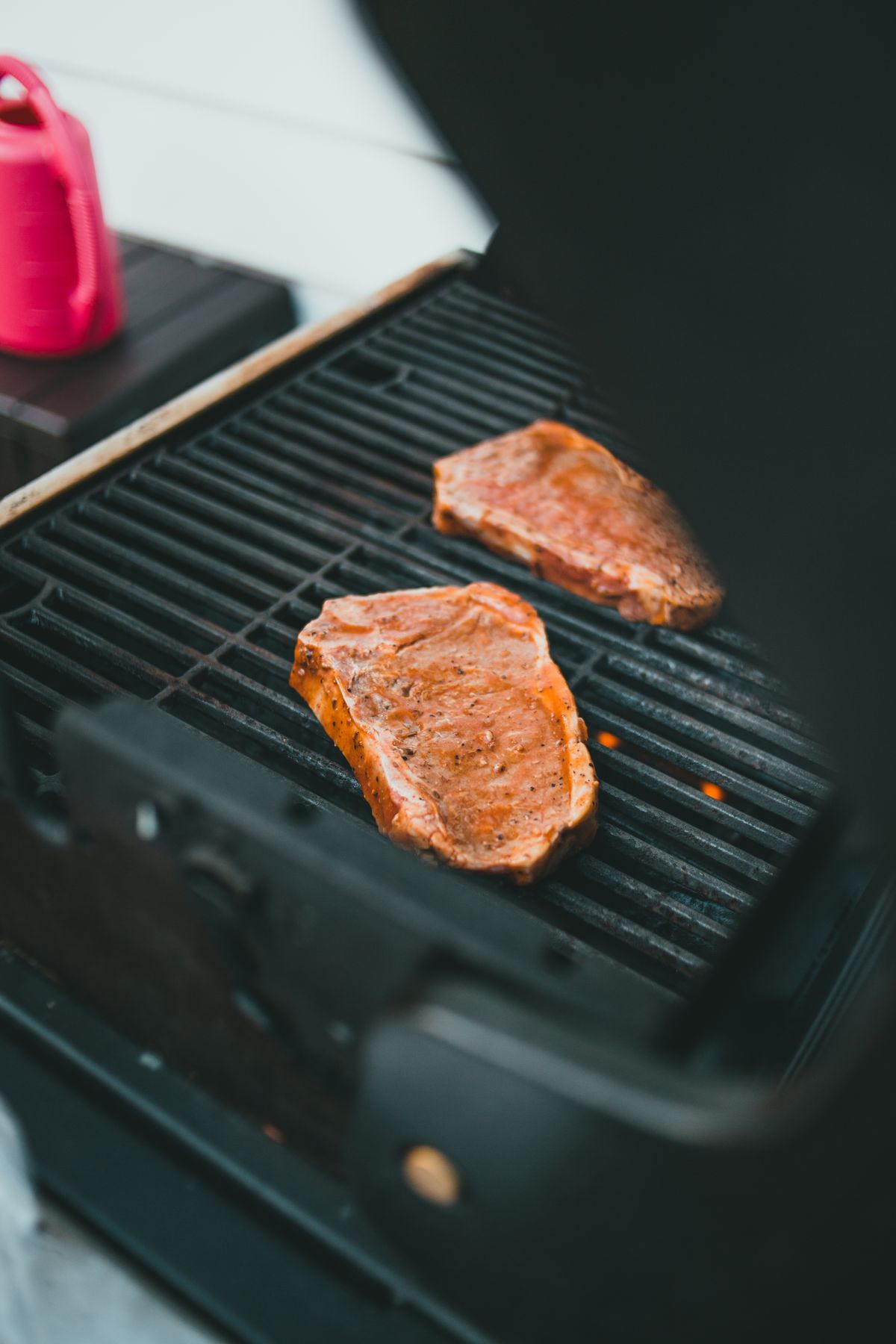
Yes, and Chipotle own word for what it does is grilled. Get the grill as hot as it goes, give it three to five minutes a side for flank or skirt, and use the same 130F target and ten-minute rest. The one advantage of a pan indoors is that you keep the board juices, which you want to toss back through the diced steak.
Methodology
The three-item ingredient list on this page is Chipotle own, from its published ingredient statement, which appears on Chipotle UK site as UK labelling law requires; the US site publishes no equivalent list, so formulations may differ. The menu description and nutrition figures are from Chipotle US nutrition facts menu. Chipotle publishes no cut, no marination time, no cooking temperature and no internal temperature for its steak, and that is stated on the page rather than filled in – the doneness figures given here are standard beef doneness temperatures, not Chipotle figures. Where a widely published recipe states an internal temperature that conflicts with every other established source, this page identifies the conflict.