Chipotle Queso Recipe: The Five Ingredients Chipotle Names
Chipotle says its Queso Blanco has thirteen real ingredients, and it names five of them. The other eight have never been published, which makes this the one recipe in this silo where we are reconstructing rather than following a list — and we would rather tell you that than present a guess as the formula. What Chipotle does publish is still more than any other page on this subject uses: the cheeses, the three chillies, the rennet, the dairy state, and the reason the queso you had in 2018 was not this one.
⬇️ Jump straight to the recipe
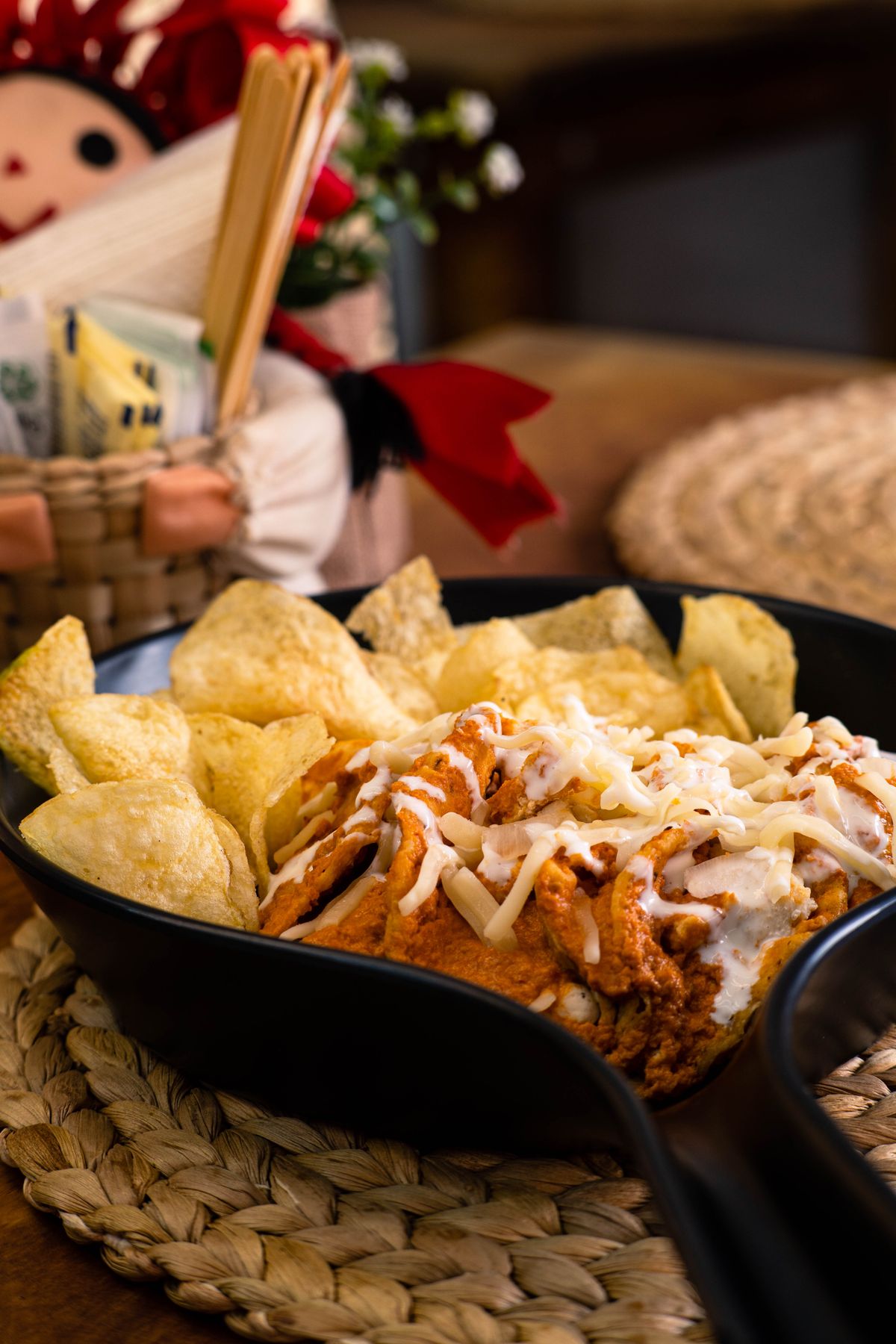
Chipotle names aged Monterey Jack, white cheddar, and serrano, poblano and chipotle peppers — five of the thirteen ingredients it says are in Queso Blanco. Grate both cheeses yourself, toss them with cornstarch, warm milk with soured cream, then add the cheese in thirds off the heat and never let it boil. Chipotle also confirms its queso uses vegetable rennet.
- Chipotle names 5 of 13 ingredients. The other 8 are unpublished.
- Aged Monterey Jack and white cheddar — both named by Chipotle.
- Serrano, poblano and chipotle — three chillies, also named.
- Vegetable rennet, per Chipotle allergen page. So it is vegetarian.
- Toss the grated cheese with cornstarch — the anti-grain trick.
- Yes, Chipotle changed its queso. Queso Blanco arrived in 2020.
What Chipotle Actually Names
Chipotle announced Queso Blanco in a press release on 26 February 2020, ahead of a national launch the following day. The useful sentence in it reads:
That gives us five of thirteen, and three more facts from the same release:
- No artificial flavours, colours or preservatives.
- The Monterey Jack comes from small and mid-size family dairy farms in Wisconsin.
- Chipotle then chief marketing officer, Chris Brandt, said the culinary team had perfected a recipe of real, responsibly sourced ingredients.
Ingredients
The cheese (grate it yourself)
- 8 oz (225 g) aged Monterey Jack, freshly grated
- 4 oz (115 g) sharp white cheddar, freshly grated
- 1 tbsp cornstarch
The base
- 1 1/2 cups (355 ml) whole milk
- 1/4 cup (60 g) soured cream
The chilli mixture
- 1 tbsp unsalted butter
- 3 tbsp finely diced white onion
- 1 poblano, charred, peeled and finely diced
- 1 serrano, seeds removed, finely diced
- 1 tbsp finely diced tomato
- 1 garlic clove, grated
- 1 tsp adobo paste, or 1/2 tsp canned chipotle, finely chopped
- 1/2 tsp ground cumin
- 1/4 tsp fine salt
Instructions
- Char the poblano. Blister it all over under a hot grill or directly over a gas flame, then cover it for 10 minutes, peel off the skin and dice it finely. Raw poblano tastes green and vegetal in a cheese sauce; charred poblano tastes like Chipotle queso.
- Grate the cheese and toss it with the cornstarch. Grate both cheeses yourself – pre-shredded cheese is coated in anti-caking starch and cellulose and it will not melt smoothly. Then toss the grated cheese through the cornstarch until every strand is dusted. This is the single most effective trick against a grainy sauce.
- Cook the chilli mixture. Butter in a saucepan over a medium heat. Onion, serrano, tomato and garlic, 4 to 5 minutes until soft. Stir in the adobo paste, cumin and salt and cook 1 minute more. Add the diced poblano. Spoon out about 2 tbsp of the mixture and set it aside.
- Warm the milk, then whisk in the soured cream. Add the milk to the pan and bring it to a bare steam – not a simmer and never a boil. Whisk the soured cream in now, before any cheese goes near it. Soured dairy added to a finished hot sauce is what makes queso split.
- Add the cheese in thirds. Take the pan off direct heat. Add a third of the cheese, whisking until it has completely disappeared before the next third goes in. Rushing this is the other way to get a grainy sauce. Return to the lowest possible heat only if it stops melting.
- Fold in the reserved chilli mixture. The 2 tbsp you set aside goes in at the end, so there are visible flecks of chilli rather than a uniformly tinted sauce.
- Serve within 30 minutes. Queso is at its best immediately and begins to tighten as it cools. See the reheating notes below, because this is the part that catches people out.
Recipe Notes
- CHIPOTLE NAMES ONLY 5 OF 13 INGREDIENTS. Its 2020 announcement said the queso has 13 real ingredients, including aged Monterey Jack, white cheddar, and serrano, poblano and chipotle peppers. The other eight have never been published. Our list comes to fourteen – close to its count, but the eight unnamed items are our reconstruction, not Chipotle recipe.
- This is the ONE recipe in this silo with no Chipotle ingredient list behind it, because queso is not a UK menu item and so does not appear on the ingredient statement the other pages rely on. It is therefore the least well-grounded recipe here and we would rather say so than pretend otherwise.
- Chipotle allergen page confirms its queso is made with VEGETABLE-BASED RENNET, which is what makes it suitable for vegetarians. Use a vegetarian Monterey Jack and cheddar if that matters to you – plenty of cheddar is not.
- Chipotle states its Monterey Jack comes from small and mid-size family dairy farms in Wisconsin.
- Do not boil it at any point, and do not add cold soured cream to finished hot cheese sauce. Those are the two ways this breaks.
- Reheat gently with a splash of milk, stirring constantly, and only once. Keeps 3 days refrigerated. Do not freeze it – it separates.
Estimated Nutrition
Calculated estimate for one serving of this home recipe, not a Chipotle figure. It will shift with your brands, cuts and portioning.
The Eight We Are Guessing At
Here is the part other pages on this subject skip, and we think it is the most important thing on this page.
So here is our list, with the status of each item marked honestly:
| Ingredient | Status |
|---|---|
| Aged Monterey Jack | Named by Chipotle |
| White cheddar | Named by Chipotle |
| Serrano pepper | Named by Chipotle |
| Poblano pepper | Named by Chipotle |
| Chipotle pepper | Named by Chipotle |
| Milk | Our reconstruction — Chipotle keeps an ingredient page for milk |
| Cultured cream | Our reconstruction — Chipotle uses the term for its sour cream |
| Cornstarch | Our reconstruction — Chipotle keeps an ingredient page for cornstarch |
| Tomato | Our reconstruction |
| Onion | Our reconstruction |
| Garlic | Our reconstruction |
| Cumin | Our reconstruction |
| Salt | Our reconstruction |
| Butter | Our addition, for the chilli mixture |
That is fourteen against Chipotle thirteen, which is about as close as a reconstruction gets. But five of them are Chipotle and nine of them are ours, and anyone presenting a full thirteen-item Chipotle queso list as fact is not working from a Chipotle source — there isn’t one.
As on every page in this silo: Chipotle publishes per-item ingredient lists on its UK site, because UK labelling law requires the disclosure. Its US site publishes no equivalent list, so UK and US formulations may differ.
Yes, Chipotle Changed Its Queso
This is one of the most common questions about Chipotle queso and no page that ranks for this recipe answers it, so: yes, and the change was significant.
| Date | What happened |
|---|---|
| 2017 | Chipotle launches a queso. The reception is notably mixed |
| 2019 into 2020 | A different recipe runs in test markets |
| 26 February 2020 | Chipotle announces Queso Blanco |
| 27 February 2020 | National launch across the US |
Chipotle own framing of it, from the 2020 release, is fairly candid for a company press statement: Brandt said that feedback on Queso Blanco in the test markets exceeded our expectations and that it quickly became clear that we needed to give all of our guests access to this delicious queso.
The name is the tell: the current item is Queso Blanco, not queso. Our menu change history tracks this kind of thing across the whole menu.
The Rennet Detail Nobody Mentions
One more thing Chipotle publishes that no other page on this subject uses, and it matters to a specific group of people.
Rennet is the enzyme that coagulates milk into cheese, and traditionally it comes from the stomach lining of a calf. Animal-rennet cheese is not vegetarian. So Chipotle specifying vegetable-based rennet is the thing that makes its cheese and its queso suitable for vegetarians, and Chipotle says so deliberately.
Which has a practical consequence for this recipe. If you are making it for a vegetarian, check your own cheese. A lot of Monterey Jack is made with microbial or vegetable rennet, but a lot of cheddar — especially traditional and aged cheddar — is not, and the label will say. Buying the wrong cheddar turns a vegetarian dip into a non-vegetarian one.
Two other things from the same page worth knowing: Chipotle sour cream is 100 per cent cultured cream, and Chipotle tells vegans to avoid its queso, along with its cheese, sour cream and the chipotle-honey vinaigrette. Full statement on our allergen guide.
Why Queso Goes Grainy
This is where a queso recipe is actually won or lost, and three of the four established recipes bury the technique in their notes. There are four failure points and all of them are avoidable.
| Mistake | What happens | The fix |
|---|---|---|
| Pre-shredded cheese | Anti-caking starch and cellulose stop it emulsifying | Grate it yourself. Non-negotiable |
| Cheese added all at once | It clumps before it can melt into the liquid | In thirds, each one fully gone before the next |
| Letting it boil | Proteins seize and squeeze out the fat — it splits | Bare steam only. Cheese goes in off the heat |
| Cold soured cream into hot sauce | Shocks the emulsion and curdles it | Whisk it into the warm milk first, before any cheese |
One expectation to set, because it is the truth about queso rather than a fault in the recipe: it is best within thirty minutes. Cheese sauce tightens as it cools and the texture never completely comes back. Reheat gently with a splash of milk, stirring the whole time, and reheat it once only — every cycle costs you texture. Do not freeze it at all.
If you are making it for a group, a slow cooker on its lowest setting holds it far better than a saucepan, and stirring in a splash of milk every twenty minutes keeps it pourable.
The Calorie Problem
Chipotle publishes real figures for queso, and they catch people out because of how the portions scale:
| Chipotle published | Portion | Calories | Fat | Sat fat | Sodium |
|---|---|---|---|---|---|
| Queso Blanco, on an entree | 2 oz | 120 | 9 g | 6 g | 250 mg |
| Queso Blanco, side | 4 oz | 240 | 18 g | 12 g | 490 mg |
| Queso Blanco, large | 8 oz | 480 | 37 g | 23 g | 980 mg |
| Chips & queso blanco, regular | serves 2 | 780 | — | — | — |
| Chips & queso blanco, large | serves 3 | 1,290 | — | — | — |
Two things to take from that. The 23g of saturated fat in a large queso is more than most people’s daily recommended intake in a single side. And Chipotle own menu says a large chips and queso serves three — at 1,290 calories, that is more than most Chipotle burritos if one person eats it.
Our home version lands near 125 calories per 2 oz against Chipotle 120, which is about as close as a reconstruction can get, with slightly less sodium. Honest assessment: on a nutritional basis this is a wash. The reasons to make it are cost, the ability to control the heat, and that it is better fresh than the cup.
Serve it with our homemade chips, and see our toppings guide for how queso compares with the rest of the line. All components are on the copycat recipes page.
Frequently Asked Questions
What is in Chipotle queso?
Chipotle says Queso Blanco contains thirteen real ingredients and names five of them: aged Monterey Jack, white cheddar, and serrano, poblano and chipotle peppers. It also says the queso is free of artificial flavours, colours and preservatives, and that its Monterey Jack comes from small and mid-size family dairy farms in Wisconsin. The remaining eight ingredients have never been published.
Did Chipotle change its queso recipe?
Yes. Chipotle launched a queso in 2017 that met a notably mixed reception, and in February 2020 it announced Queso Blanco as a different recipe, rolled out nationally on 27 February 2020 after a period in test markets. Its then chief marketing officer said the culinary team had perfected a recipe of real, responsibly sourced ingredients and that feedback in the test markets had exceeded expectations. So if you tried Chipotle queso before 2020 and did not like it, you tried a different product.
Is Chipotle queso vegetarian?
Yes, and Chipotle confirms the specific reason on its allergen page: its shredded Monterey Jack cheese and its queso are made with vegetable-based rennet. That matters because a great deal of cheese is made with animal rennet, which makes it unsuitable for vegetarians. If you are making this at home for a vegetarian, check that your own Monterey Jack and cheddar say vegetarian on the label — many cheddars do not.
What cheese does Chipotle use in its queso?
Aged Monterey Jack and white cheddar, both named directly in Chipotle 2020 announcement. It does not publish the ratio between them, which is why established copycat recipes split between 2:1 and 1:1 in favour of the Jack. We use 2:1, because Monterey Jack is the better melter and the cheddar is there for sharpness rather than body.
Why is my homemade queso grainy?
Three likely causes, in order. You used pre-shredded cheese, which is coated in anti-caking starch and cellulose that stop it melting cleanly. You added the cheese too fast rather than in stages, so it clumped before it could emulsify. Or you let it boil, which makes the proteins seize and squeeze the fat out. Tossing the grated cheese with a tablespoon of cornstarch before it goes in prevents most of it.
How long does homemade queso last?
Three days refrigerated, and it is genuinely best within thirty minutes of making it. It tightens as it cools and the texture never fully returns. Reheat it gently with a splash of milk, stirring constantly, and reheat it only once — each cycle makes it grainier. Do not freeze it; dairy sauces split on thawing and no amount of whisking fixes that.
How many calories are in Chipotle queso?
Chipotle publishes 120 calories for a 2 oz entree portion, 240 for a 4 oz side and 480 for the 8 oz large. The one to watch is chips and queso blanco, which Chipotle puts at 780 calories for the regular and 1,290 for the large — and its menu notes that a regular order serves two and a large serves three. A large chips and queso on your own is more calories than most burritos.
Can I use evaporated milk or heavy cream instead?
You can, and established recipes are split four ways between evaporated milk, whole milk, heavy cream and half-and-half, which tells you none of them knows what Chipotle uses either. We use whole milk plus soured cream because Chipotle describes its sour cream as cultured cream and uses cultured dairy elsewhere, and because whole milk keeps the sauce pourable rather than heavy. Evaporated milk is the most forgiving if you are worried about splitting.
Methodology
The five named ingredients, the thirteen-ingredient count, the Wisconsin dairy sourcing and the absence of artificial flavours, colours and preservatives all come from Chipotle own newsroom release of 26 October 2026 announcing the national launch of Queso Blanco. The vegetable rennet confirmation is quoted from Chipotle US allergen page. Nutrition figures are from Chipotle US nutrition facts menu. Unlike the other recipes in this silo, there is no Chipotle per-item ingredient list for queso to work from, because queso is not a UK menu item and the ingredient statement the other pages rely on is Chipotle UK document – so the eight unnamed ingredients in our recipe are a reconstruction, informed by where established published recipes agree, and the page says so plainly rather than implying otherwise.